

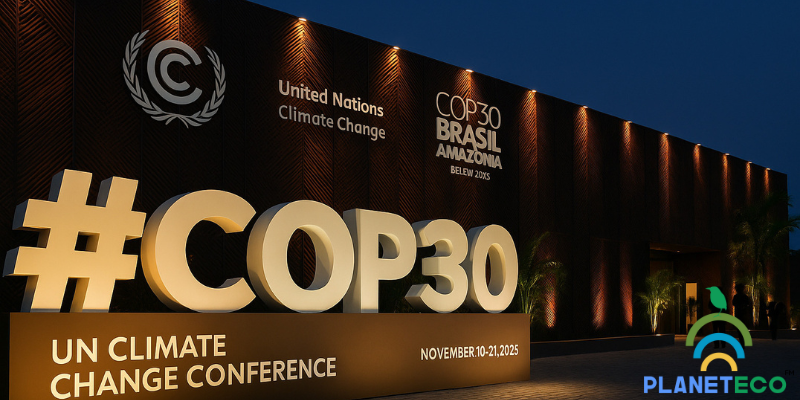
Nigeria and other African nations made a powerful mark at the 30th United Nations Climate Change Conference (COP30), held from November 10–21, 2025, in Belém, Brazil. As the world gathered in the Amazon to confront the escalating climate crisis, Africa’s strong and coordinated presence signaled a bold shift: the continent is no longer a passive observer but an active architect of global climate solutions.
Why COP30 Matters
COP30 is widely regarded as a “delivery COP” a summit designed to convert climate pledges into concrete action. Hosted in Belém, a vital gateway to the Amazon rainforest, the conference emphasized five major priorities:
Energy Transition & Mitigation: Doubling global renewable energy capacity, accelerating fossil-fuel phase-out, and supporting low-carbon pathways.
Adaptation & Resilience: Introducing new global indicators to track adaptation progress and assist vulnerable nations facing worsening climate impacts.
Climate Finance Reform: Advancing the Baku-to-Belém Roadmap aiming to scale climate finance to $1.3 trillion annually by 2035
Protecting Forests & Nature: Recognizing tropical forests, biodiversity, and nature-based solutions as critical tools in reducing global emissions.
Inclusive Climate Justice: Ensuring youth, Indigenous communities, and developing nations are central to global decision-making.
Africa’s Role: Leadership with Purpose
PlanetEco.fm highlights the strategic and meaningful participation of Nigeria and African delegations whose unified stance strengthened the continent’s negotiating power.
Elevating Climate Justice
African leaders placed climate justice at the heart of discussions, underscoring the need for fair solutions that address poverty, inequality, and historical responsibility for emissions.
Positioning Forests as Economic and Ecological Assets
With the Congo Basin and other vast natural ecosystems, African countries emphasized that protecting nature is both a climate imperative and an economic opportunity.
Demanding Fair Climate Finance
African negotiators called for increased access to grants rather than loans to ensure vulnerable communities can adapt without deepening debt burdens.
Advancing Technology & Clean Energy Partnerships
Nigeria showcased its growing renewable energy innovations and sought stronger international partnerships to expand clean power access across the continent.
What COP30 Means for Nigeria and Africa’s Future
The outcome of COP30 provides a hopeful and practical roadmap for Africa’s next chapter in climate action:
Increased Investment in Green Growth: Expanded opportunities for funding solar, wind, sustainable agriculture, and climate-smart infrastructure.
Enhanced Climate Resilience: Stronger flood defenses, drought-resistant agriculture, and improved urban planning for climate risks.
Better Protection for Forests: New financial mechanisms that reward conservation, restore degraded land, and support sustainable land-use practices.
Global Influence: A more unified African voice ensures climate policies reflect the needs and realities of those most affected by the crisis.
A Step Toward a Safer, Greener Future
While COP30 did not resolve every global climate challenge, it brought the world closer to meaningful and fair action. Nigeria’s contributions stood out practical, principled, and future-focused. As implementation begins, PlanetEco.fm remains committed to amplifying African climate leadership and advancing environmental education across the continent.
The future is green, global, and undeniably African. COP30 marks a strong step toward that shared vision.